Advance Directives and Living Wills: Step-by-Step for Families in 2026
Short answer: An advance directive puts a person’s medical wishes in writing. It usually includes a living will, which states treatment preferences, and a health care power of attorney, which names someone to decide if they cannot. Complete them while healthy, share copies with doctors and family, and review them after major health changes.
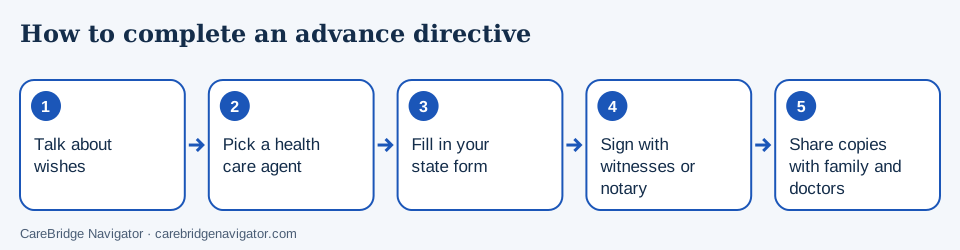
Advance directives and living wills can feel difficult to create. Still, they are essential for ensuring your or your loved one's end-of-life wishes are honored. Families navigating eldercare in 2026 need to understand these documents and the steps involved more than ever. The guide explains essential steps, basic terms, and practical ways to discuss sensitive topics.
What are Advance Directives and Living Wills?
Advance directives are legal documents that let you make medical care decisions in advance. They provide instructions if you become unable to communicate your wishes. Clear instructions help healthcare providers and family members, reducing stress and uncertainty during difficult times. A living will is an advance directive describing your preferences for end-of-life medical treatment. Preferences can include whether you want life-sustaining treatments, such as ventilation or artificial nutrition and hydration. Advance directives are not just for older people; any adult can benefit from having them. Planning ahead ensures your choices are respected, even when you cannot speak for yourself.
Key Documents: Living Wills, Durable Power of Attorney for Healthcare, and DNR Orders
Several documents beyond a living will are essential for a complete advance care plan. A Durable Power of Attorney for Healthcare (DPOAHC) designates a trusted person to make medical decisions for you if you become incapacitated. Other names include Healthcare Proxy and Medical Power of Attorney. Your agent or proxy should understand your values and wishes. A Do Not Resuscitate (DNR) order is a medical order written by a doctor. The order tells medical staff not to perform cardiopulmonary resuscitation (CPR) if your breathing or heart stops. DNRs are typically discussed in hospitals or for people with serious health conditions. Understanding the differences between these documents and how they work together is essential for a complete healthcare directive.
Physician Orders for Life-Sustaining Treatment (POLST) and Medical Orders for Life-Sustaining Treatment (MOLST)
POLST (Physician Orders for Life-Sustaining Treatment) and MOLST (Medical Orders for Life-Sustaining Treatment) forms are essential for people with serious illnesses or frailty. Advance directives address future medical care. POLST/MOLST forms are medical orders signed by a doctor, so healthcare providers can act on them immediately. The forms travel with patients between hospitals, nursing homes, and home care. Keeping the forms with patients ensures consistent medical treatment based on their wishes. The forms specify preferences for resuscitation, medical interventions, antibiotics, and artificially administered nutrition. As medical orders, they carry more weight than advance directives in immediate medical situations. Names and specific requirements vary by state, so understanding your region's rules is essential. Ask your healthcare provider whether a POLST/MOLST is appropriate for your situation and how to complete the form correctly.
State-Specific Requirements and Nuances
Legal requirements for advance directives vary significantly by state. Most states require written documents signed by the individual and witnessed. The required number of witnesses, whether witnesses can be beneficiaries, and notarization requirements differ. Some states allow oral advance directives under specific, limited circumstances. Research your state's laws or consult an elder law attorney to ensure your documents are legally sound and enforceable. Generic templates can be a starting point but may not meet every state-specific requirement. As a result, the documents may be less effective or even invalid. Understanding state differences is essential for creating legally binding, effective directives.
Step-by-Step: Creating Your Advance Directives
Step 1: Understand Your Options and Values
Your values, beliefs, and medical treatment preferences deserve careful thought before you put anything in writing. What quality of life is important to you? What medical interventions would you accept or decline? Discuss your thoughts with trusted family members and your doctor. Resources like The Conversation Project offer helpful guides for starting these discussions.
Step 2: Choose Your Healthcare Agent
Your healthcare agent should be a trusted person designated through your Durable Power of Attorney for Healthcare. Choose someone who knows you well and understands your values. Your agent must be able to make difficult medical decisions if you cannot. Discuss your wishes thoroughly with your agent to prepare them for the responsibility. Naming an alternate agent is also wise.
Step 3: Complete the Necessary Forms
Advance directive forms are available from several sources. You can use free online templates from reputable organizations, such as state bar associations, hospitals, or AARP. You can also purchase kits. Consulting an elder law attorney is strongly recommended for complex situations, full legal compliance, or peace of mind. An attorney can tailor documents to your needs, ensure they meet state requirements, and address unclear wording. When using templates, follow all instructions carefully, especially your state's witness and notarization requirements.
Step 4: Sign and Witness
Completed forms must be signed in the presence of the required number of witnesses, or a notary if your state requires one. Ensure witnesses understand their role and are eligible under state law. For example, your healthcare agent or a beneficiary of your estate may not be allowed to serve as a witness.
Step 5: Distribute and Store
Your completed and signed advance directives should be copied for distribution. Give copies to your healthcare agent, alternate agent, primary care physician, and any specialists involved in your care. Keep your own copy in an easily accessible but secure location. Avoid a safe deposit box, where the documents might be inaccessible during an emergency. Consider enrolling in a digital registry if your state offers one. Review your documents periodically, especially after significant changes in your health, relationships, or wishes.
Discussing End-of-Life Wishes with Parents
Conversations about advance directives and end-of-life wishes can be difficult for elderly parents and their families. Parents may feel uncomfortable or avoid the topic. Still, discussing their wishes is one of the most loving and responsible steps a family can take.
Approach with Empathy and Respect
A calm, private setting is a good place for the conversation. Start by expressing your love and concern for your parents' well-being. Focus on their peace of mind and ensuring their wishes are honored. Avoid accusatory language or making them feel pressured.
Share Your Own Plans
An adult child who shares a personal advance directive, and the reasons for writing it, makes it easier for parents to consider their own plans. Sharing your advance directive makes the conversation feel normal and shows your parents you are not singling them out.
Focus on Quality of Life
The conversation can focus on living well and ensuring comfort rather than death. Discuss your parents' values around independence, dignity, and a meaningful life. Focusing on those values can make the discussion feel less focused on death and give your parents a greater sense of control.
Free Templates vs. Attorney-Drafted Documents
Free state-specific advance directive forms are available from your state department of health, AARP, and CaringInfo.org. The forms are often sufficient for straightforward situations. An elder law attorney typically costs $200-$500 and is worth considering if your parent has complex medical conditions, blended family dynamics, or significant assets. An attorney is also worth considering if your parent's wishes go beyond standard form options. An attorney can coordinate the directive with a broader estate plan, including wills, trusts, and powers of attorney.
Frequently Asked Questions
What is the difference between a living will and a healthcare proxy?
A living will states your specific medical treatment preferences, such as ventilator use or feeding tubes. A healthcare proxy designates a person to make medical decisions on your behalf. Most experts recommend having both — the living will guides the proxy's decisions when you cannot speak for yourself.
Are advance directives valid in all states?
Advance directives are generally valid across states, but each state has its own form and witnessing rules. If your parent splits time between states or travels, complete an advance directive for each state where your parent spends significant time. Alternatively, use a comprehensive form meeting the strictest state's requirements.
Where should we store the original document?
Original documents belong in an easily accessible spot at home, not a safe deposit box. Give copies to your healthcare agent, primary care doctor, local hospital, and close family. Many states also offer a registry where you can upload directives so emergency providers can access them quickly.
What is a POLST/MOLST and who needs one?
POLST/MOLST forms are doctor-signed medical orders for people with serious illness or advanced frailty. Unlike advance directives for future care, these orders can be acted on immediately and travel with patients between care settings. Talk to your parent's doctor about whether a form is appropriate.
Can advance directives be changed or revoked?
People with decision-making capacity can update or revoke their advance directives at any time. Destroy old copies and distribute the new version to everyone who had the previous one. Review the documents every few years or after any major health change.
The article is educational only and is not legal or medical advice. Consult a licensed elder law attorney in your state for guidance specific to your family's situation.
Sources
How this guide was written and reviewed
CareBridge Navigator guides are drafted with writing software and research tools, then checked line by line by Shanda Browning Vaughn, RN, a registered nurse since 2000. Shanda confirms every figure against the official sources listed on the page before a guide is published, and updates the guide when Medicare, Medicaid or VA rules change.
Related guides
- Guardianship vs. Conservatorship: Which Does Your Parent Need?
- Power of Attorney for Aging Parents: A Complete 2026 Legal Guide
- Understanding Power of Attorney for Elderly Parents
- Assisted Living vs. Memory Care: Choosing for Dementia
- In-Home Care vs. Assisted Living: 2026 Cost & Lifestyle Guide
More from CareBridge Navigator
- About CareBridge Navigator
- Why Shanda built CareBridge Navigator
- Caregiver directory
- Caregiver community
- Caregiver tax credits
- EEOICPA benefits screener
- Care Agent
- Life Alarm medical alert
- Install the app
- Press and media
Free caregiver tools
- Free care roadmap
- Emergency fridge sheet
- Elder care checklist
- Caregiver questions answered
- Care settings compared
- Compare care options
- Resource directory
- Caregiver education library
More caregiver guides · Start your free CareBridge Navigator assessment