Understanding the Stages of Grief as a Caregiver
Understanding the Stages of Grief as a Caregiver
Grief doesn't happen only after a loved one dies. For caregivers, grief often begins long before death, an experience known as anticipatory grief. Understanding this experience can help you process your emotions and find healthy ways to cope.
What Is Anticipatory Grief?
Anticipatory grief is mourning that occurs before a death or major loss. As a caregiver, you may grieve:
- The person your loved one used to be — Personality changes, lost memories, diminished abilities
- The relationship you had — The relationship between parent and child, or between spouses, changes deeply
- Your own life — Career opportunities, social connections, personal freedom
- The future you imagined — Retirement plans, family traditions, growing old together
How Caregiver Grief Is Different
Caregiver grief is ongoing and ambiguous, unlike grief after a death:
- Your loved one is still alive but may feel emotionally absent
- Caregivers are expected to keep functioning while grieving
- Society often doesn't recognize your grief because the person is still here
- Caregiver grief may come in waves — triggered by each new loss of ability or recognition
- Caregivers may feel guilty for grieving someone who hasn't died
The Stages of Caregiver Grief
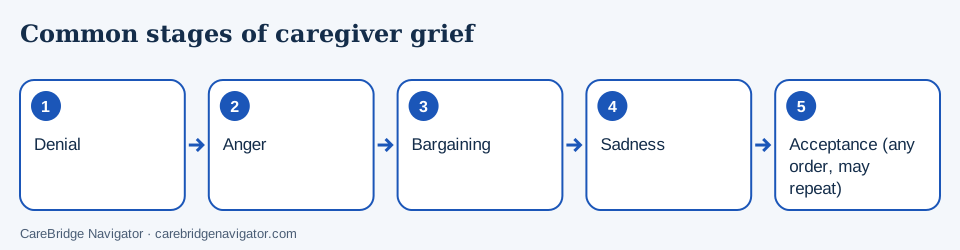
Grief doesn't follow a straight, predictable path. Understanding common phases can help you identify what you're feeling:
#### Denial
- "Mom is fine, she's just having a bad day"
- Caregivers may minimize symptoms or refuse to seek a diagnosis
- Caregivers may believe life will go back to normal
#### Anger
- Caregivers may feel frustrated with the disease, the healthcare system, or other family members
- Caregivers may feel resentment toward the care recipient
- Caregivers may feel angry at themselves for "not doing enough"
- Caregivers may ask, "Why us?"
#### Bargaining
- A caregiver may think, "If I just find the right treatment, my loved one will get better"
- Caregivers may spend too much time researching cures or alternative therapies
- Caregivers may make deals with themselves or a higher power
#### Depression
- Caregivers may feel overwhelming sadness about what's been lost
- Caregivers may withdraw from friends, activities, and things they once enjoyed
- Caregivers may feel hopeless about the future
- Physical symptoms may include fatigue, appetite changes, and sleep problems
#### Acceptance
- Acceptance means acknowledging the reality, not "being okay with it"
- Caregivers may find ways to cherish the present moment
- Caregivers may make peace with what they can and cannot control
- Caregivers may begin to plan for the future realistically
Healthy Ways to Process Grief
#### Allow Yourself to Feel
- Caregivers can name their emotions — "I feel sad because..." or "I'm angry that..."
- Caregivers can give themselves permission to grieve without guilt
- Caregivers can cry when needed — Crying is a healthy release
- Caregivers can journal their thoughts and feelings
#### Connect with Others
- Caregivers can join a caregiver support group (in-person or online)
- Caregivers can talk to a therapist who specializes in grief or caregiver issues
- Caregivers can share their experience with trusted friends or family
- Caregivers can connect with other caregivers who understand
#### Take Care of Your Body
- Caregivers can exercise regularly — Even a short walk releases endorphins
- Caregivers can eat nourishing meals — Grief often disrupts appetite
- Caregivers can prioritize sleep — Fatigue intensifies grief
- Caregivers can limit alcohol — Alcohol may seem to help temporarily but worsens depression
#### Find Meaning
- Caregivers can create a memory book or record their loved one's stories
- Caregivers can focus on what they CAN still share — music, touch, presence
- Caregivers can celebrate small moments of connection
- Caregivers can recognize the deep value of being present for someone they love
After Your Loved One Passes
Many caregivers experience complicated emotions after a loved one's death:
- Relief — Guilt may follow immediately after feeling relieved
- Emptiness — Your identity was deeply tied to caregiving
- Delayed grief — You were so busy caregiving that you didn't fully process your losses
- Lost purpose — "What do I do now?"
Caregivers should give themselves at least a year before making major life decisions. Seek professional support if grief feels unmanageable.
Resources for Grieving Caregivers
- National Alliance for Caregiving: caregiveraction.org
- GriefShare: griefshare.org (faith-based support groups)
- SAMHSA Helpline: 1-800-662-4357 (free, confidential support)
- Crisis Text Line: Text HOME to 741741
CareBridge Navigator's community forum connects you with caregivers who understand. You're not alone in your grief.
What is anticipatory grief, and why does nobody warn you about it?
Anticipatory grief is mourning that starts before a death. Caregivers feel grief while their loved one is still alive. That timing can make grief confusing and isolating.
Anticipatory grief is especially heavy in dementia, as caregivers lose parts of the person they know over years. You grieve the conversations you used to have, the parent who advised you, and the marriage you had. Then you get up and provide care for the person in front of you. Both experiences happen together.
Caregiver grief is not weakness or a failure of love. Naming the experience as grief brings most caregivers their first sense of relief.
Do the stages happen in order?
The stages of grief do not happen in order. Denial, anger, bargaining, depression and acceptance describe feelings caregivers recognize. Those feelings arrive out of order, repeat, and overlap in the same afternoon.
Caregivers can expect feelings to return. A hospital admission can bring you back to bargaining after months of acceptance. Returning to familiar feelings is not backsliding. Grief does not follow a fixed sequence.
Why do relief and guilt arrive together?
Relief and guilt are both honest feelings. After a long illness, death can bring relief that the suffering is over and relief that caregiving is over. Caregivers often refuse to admit aloud that they feel relieved about caregiving ending.
Relief about sleeping through the night again is not the same as being glad your mother died. Caregivers who share this feeling with one trusted person almost always hear that the feeling is common. Caregivers who never share the feeling carry it for years.
What actually helps while you are grieving?
- Caregivers can speak about grief with one person who will listen without flinching. A support group of other caregivers is usually better than family for these conversations.
- Caregivers can keep a small routine. Include sleep, food and one short walk, even when nothing feels meaningful.
- Caregivers can write down memories rather than what they wish they had done.
- Caregivers can allow anniversaries to be hard. Plan something small for them rather than pretending they are ordinary days.
- Caregivers can delay big decisions for a year if possible. Those decisions include selling the house, moving, or quitting a job.
- Caregivers can expect paperwork to bring back grief. Estate work is grief with a deadline.
Where can you get real support?
Hospice bereavement services are free to the family for 13 months after the death. You do not need to have used that hospice's care for the whole time. Ask for these services.
Caregivers experiencing grief tied to dementia can call the Alzheimer's Association helpline at 1-800-272-3900, any hour. Ask your doctor for a referral if sleep, appetite or daily functioning have not improved after several months. Also ask if grief feels stuck rather than slowly changing.
Caregivers having thoughts of self-harm can call or text 988 to reach the Suicide and Crisis Lifeline. Heavy grief is common among family caregivers, and caregiver grief responds to counseling and support groups.
Sources
- National Institute on Aging: mourning the death of a spouse
- Family Caregiver Alliance
- 988 Suicide and Crisis Lifeline
How this guide was written and reviewed
CareBridge Navigator guides are drafted with writing software and research tools, then checked line by line by Shanda Browning Vaughn, RN, a registered nurse since 2000. Shanda confirms every figure against the official sources listed on the page before a guide is published, and updates the guide when Medicare, Medicaid or VA rules change.
Related guides
- Talking to Aging Parents About Assisted Living: A Step-by-Step Guide
- Hospice Care: When Is It the Right Time?
- How to Create a Caregiver Burnout Prevention Plan
- Medicare vs Medicaid: What's the Difference for Seniors?
- Creating a Safe Home for Aging in Place
More from CareBridge Navigator
- About CareBridge Navigator
- Why Shanda built CareBridge Navigator
- Caregiver directory
- Caregiver community
- Caregiver tax credits
- EEOICPA benefits screener
- Care Agent
- Life Alarm medical alert
- Install the app
- Press and media
Free caregiver tools
- Free care roadmap
- Emergency fridge sheet
- Elder care checklist
- Caregiver questions answered
- Care settings compared
- Compare care options
- Resource directory
- Caregiver education library
More caregiver guides · Start your free CareBridge Navigator assessment