Sundowning in Dementia: Causes, Symptoms, and Solutions
Sundowning in Dementia: Causes, Symptoms, and Solutions
Many people with dementia experience increased confusion, agitation, and behavioral changes as afternoon fades into evening. This pattern, known as sundowning, affects an estimated 20-45% of people with Alzheimer's disease and related dementias.
What Is Sundowning?
Sundowning (also called sundown syndrome) is a pattern of increased behavioral and psychological symptoms in the late afternoon, evening, or nighttime. Despite its name, sundowning doesn't always coincide with sunset.
Common Symptoms
- Increased agitation and restlessness
- Confusion and disorientation
- Anxiety and fearfulness
- Pacing or wandering
- Yelling, crying, or verbal aggression
- Suspicion or paranoia
- Resistance to caregiving
- Shadowing (following the caregiver constantly)
- Difficulty sleeping or reversed sleep-wake cycle
What Causes Sundowning?
Researchers believe sundowning results from a combination of factors:
#### Biological Factors
- Disrupted circadian rhythm — Dementia damages the brain's internal clock
- Hormonal changes — Melatonin production decreases
- Fatigue — Mental and physical exhaustion builds throughout the day
- Low light levels — Reduced light can increase confusion, and shadows can be frightening
#### Environmental Factors
- Overstimulation during the day
- Unmet needs (hunger, thirst, pain, need to use the bathroom)
- Changes in routine or unfamiliar environments
- Caregiver stress — People with dementia can sense when their caregiver is tired or frustrated
Strategies That Help
#### Adjust the Environment
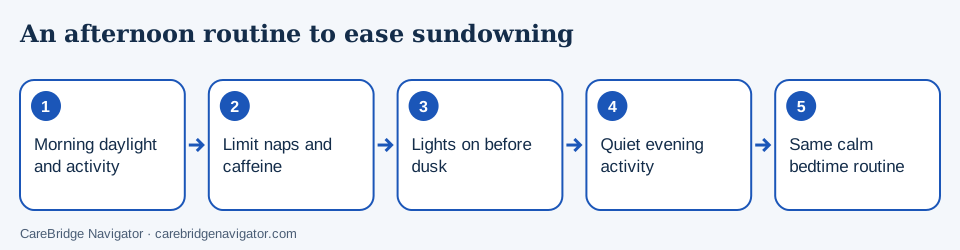
- Caregivers can increase lighting in the late afternoon. Turn on bright lights before darkness falls outside.
- Caregivers can close curtains before sunset to reduce shadows and glare.
- Caregivers can reduce noise and activity levels in the evening.
- Caregivers can create a calm atmosphere with soft music or familiar sounds.
- Caregivers can maintain a comfortable temperature. Too much heat or cold can increase agitation.
#### Modify the Daily Routine
- Caregivers can limit caffeine and sugar after noon.
- Caregivers can encourage physical activity earlier in the day (morning walks, gentle exercises).
- Caregivers can schedule demanding activities for the morning when the person is most alert.
- Caregivers can plan quiet, calming activities for the afternoon (folding towels, looking at photo albums).
- Caregivers can limit or eliminate naps if nighttime sleep is a problem.
- Caregivers can serve the main meal at lunch and keep dinner lighter.
#### Manage Evening Time
- Caregivers can establish a consistent bedtime routine with the same steps in the same order each night.
- Caregivers can offer a light snack before bed (warm milk, crackers).
- Caregivers can use nightlights in hallways, bathrooms, and bedrooms.
- Caregivers can play familiar, soothing music during the evening.
- Caregivers can avoid television with loud or distressing content.
#### Address Unmet Needs
- Caregivers can check for pain using a pain scale designed for people who cannot communicate verbally.
- Caregivers can ensure adequate hydration throughout the day.
- Caregivers can monitor for urinary tract infections. UTIs can greatly worsen confusion in older people.
- Caregivers can review medications with the doctor. Some drugs can worsen sundowning.
When to Call the Doctor
Caregivers should contact their loved one's physician if:
- Sundowning symptoms suddenly worsen
- The person shows signs of pain or illness
- Sleep disturbances are severe and persistent
- The person becomes a danger to themselves or others
- Current management strategies are not working
#### Medical Treatments
Doctors may recommend the following treatments in some cases:
- Melatonin supplements to help regulate sleep
- Light therapy using a therapeutic light box
- Medication adjustments (some medications can worsen symptoms)
- Low-dose anti-anxiety or antipsychotic medications in severe cases (used cautiously)
For Caregivers: Protecting Yourself
Sundowning is exhausting for caregivers. Protect your own well-being:
- Caregivers can take shifts with other family members or hire evening respite help.
- Caregivers should avoid taking aggressive behavior personally. The disease causes the behavior, not your loved one.
- Caregivers can join a caregiver support group to share strategies and find emotional support.
- Caregivers can practice self-compassion. You're doing the best you can in a difficult situation.
CareBridge Navigator offers community support and caregiver resources. Connect with others who understand your experiences.
Why does sundowning happen at all?
Sundowning is late-day confusion, restlessness or agitation in someone with dementia. Sundowning usually begins in the late afternoon and can last into the night.
Several factors build up at that hour. Dementia damages the internal body clock, weakening the light cue that separates day from evening. Fatigue has built up all day, and a tired brain with dementia has less capacity to cope. Household activity often peaks around dinner, adding noise and movement. Fading light creates shadows that people misread. Unmet needs such as hunger, thirst, pain, constipation or a full bladder arrive at the same time.
What should be ruled out medically first?
Sudden agitation is not always sundowning. A urinary tract infection is a common cause of an abrupt change in someone with dementia, often with no fever. Constipation, uncontrolled pain, dehydration and a new or changed medication are the next possible causes.
Caregivers should call the doctor when agitation appears suddenly or worsens sharply over a day or two. Also call when agitation comes with fever, new incontinence, new falls or hallucinations. A rapid change is a medical event, not a behaviour problem.
Which practical changes reduce it?
- Caregivers can turn lights on before the sun starts to drop and close curtains to remove shadows.
- Caregivers can arrange bright light and some movement in the morning. Outdoor light before noon helps reset the body clock.
- Caregivers can keep the late afternoon quiet with fewer visitors, no vacuuming and the television off.
- Caregivers can move demanding tasks such as bathing and appointments to the morning.
- Caregivers can serve the larger meal at midday and something simple in the evening.
- Caregivers can cut caffeine after noon and limit alcohol.
- Caregivers can offer a snack and a bathroom trip at the usual hour of agitation, before symptoms start.
- Caregivers can keep a predictable evening routine in the same order every night.
How should you respond in the moment?
Caregivers should not argue about what the person with dementia says. Arguing increases tension and never wins. Agree with the feeling instead, then redirect.
Caregivers should lower their voice and slow down. Approach from the front, at eye level. Offer one simple choice rather than an open question. Give a job to do, such as folding towels or sorting mail. Purposeful movement settles agitation better than being told to sit down.
A person with dementia may want to go home despite standing in their own home. Ask what the person misses about home. That question usually leads to a gentler conversation than a correction.
When are medications appropriate?
Medication is a last step, not a first one, and antipsychotics carry real risks for older adults with dementia. Before agreeing to an antipsychotic, ask the prescriber what specific behaviour the medication targets and what will be tried first. Ask how long the trial lasts and when the medication will be reviewed for stopping. Treat any new prescription as a trial with an end date.
Caregivers should keep a simple log for two weeks: the time, what happened just before, what you tried and what worked. Patterns show up quickly, and the log helps make the doctor's visit useful.
Sources
How this guide was written and reviewed
CareBridge Navigator guides are drafted with writing software and research tools, then checked line by line by Shanda Browning Vaughn, RN, a registered nurse since 2000. Shanda confirms every figure against the official sources listed on the page before a guide is published, and updates the guide when Medicare, Medicaid or VA rules change.
Related guides
- Understanding the Stages of Grief as a Caregiver
- Talking to Aging Parents About Assisted Living: A Step-by-Step Guide
- Hospice Care: When Is It the Right Time?
- Assisted Living vs Nursing Home: Key Differences
- How to Choose the Right Home Care Agency
More from CareBridge Navigator
- About CareBridge Navigator
- Why Shanda built CareBridge Navigator
- Caregiver directory
- Caregiver community
- Caregiver tax credits
- EEOICPA benefits screener
- Care Agent
- Life Alarm medical alert
- Install the app
- Press and media
Free caregiver tools
- Free care roadmap
- Emergency fridge sheet
- Elder care checklist
- Caregiver questions answered
- Care settings compared
- Compare care options
- Resource directory
- Caregiver education library
More caregiver guides · Start your free CareBridge Navigator assessment