Top 10 Questions to Ask When Touring Assisted Living
Top 10 Questions to Ask When Touring Assisted Living Facilities
Touring an assisted living facility can feel overwhelming. With so much to see and consider, important questions are easy to forget. Use this checklist to gather the information you need to make the best decision for your loved one.
1. What Is Included in the Base Monthly Rate?
The base monthly rate is perhaps the most important financial question. Ask specifically:
- Are meals included? How many per day?
- Are housekeeping and laundry included?
- Is transportation to medical appointments included?
- Are activities and programs included or extra?
Why it matters: Many facilities advertise a base rate but charge additional fees for services your loved one may need.
2. How Do You Handle Increasing Care Needs?
Seniors' needs often change over time. Understanding how the facility handles changes helps prevent surprises:
- Does the facility have a tiered pricing structure based on care level?
- At what point would a resident need to move to a higher level of care?
- Does the facility offer memory care on the same campus?
3. What Is Your Staff-to-Resident Ratio?
The staff-to-resident ratio directly affects quality of care:
- What is the staff-to-resident ratio during the day, evening, and overnight?
- Is a nurse on-site 24/7 or just during business hours?
- How does the facility handle staffing shortages?
4. How Do You Handle Medical Emergencies?
The facility's emergency procedures are critical to understand:
- Does each room have an emergency response system?
- What is the average response time?
- Which hospital does the facility transport residents to?
- How are families notified of emergencies?
5. Can I See a Sample Activity Calendar?
Activities have a strong effect on quality of life:
- Does the facility offer activities every day, including weekends?
- Are activities varied to accommodate different interests and abilities?
- Does the facility offer outings to restaurants, shops, or cultural events?
- Does the facility offer a fitness program or exercise classes?
6. What Are Your Dining Options?
Meals are a major part of daily life:
- Can visitors try a meal during a tour?
- Are multiple menu options available at each meal?
- Can the facility accommodate dietary restrictions and preferences?
- Are snacks available between meals?
7. What Is Your Policy on Visitors?
Family involvement is important for well-being:
- Does the facility have restricted visiting hours?
- Can family members join for meals?
- Are pets allowed to visit?
- Does the facility have a guest room for out-of-town family?
8. How Do You Ensure Resident Safety?
The facility's safety features deserve a close look:
- Do bathrooms have grab bars and non-slip surfaces?
- Is the facility secure against unauthorized entry?
- Does every room have smoke detectors and sprinklers?
- What is the facility's fall prevention program?
9. What Happens If My Loved One Runs Out of Money?
The possibility of running out of money is difficult but important to discuss:
- Does the facility accept Medicaid? If so, under what circumstances?
- Does the facility have a financial assistance program?
- What is the notice period if a resident must leave?
10. Can I Speak with Current Residents and Their Families?
Feedback from current residents and families is valuable:
- Can the facility provide references from current families?
- Does the facility have a resident council or family advisory group?
- How does the facility handle complaints and grievances?
Bonus Tips for Your Tour
- Your visits should cover different times of day (morning, mealtime, evening).
- Your observations should include how staff interact with residents.
- Do residents look happy, engaged, and well-groomed?
- Does the facility have cleanliness and pleasant smells?
- Your gut feeling about the atmosphere deserves your trust.
Does your family need help evaluating care options? CareBridge Navigator's care assessment matches your loved one's needs with the appropriate level of care.
What should you do before the tour starts?
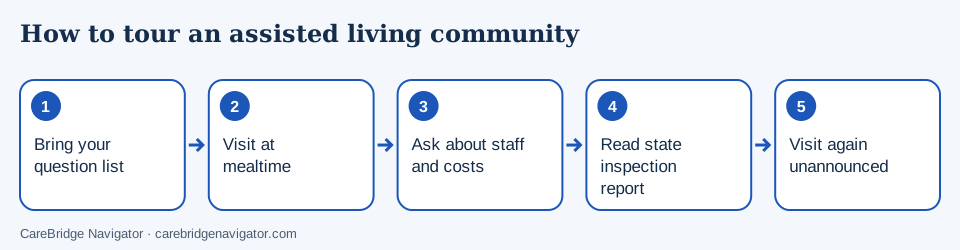
The community deserves some research before your visit. Ask your state licensing agency for recent inspection reports. The reports are public records. Read the last two years of findings and bring any repeated problem with you as a question.
Your first tour should be scheduled, followed by a second unannounced visit at a different time of day. Late afternoon and dinner time show you far more than a 10 a.m. appointment.
Which money questions do families forget to ask?
- What does the base monthly rate include, line by line?
- What are the care levels, what triggers a move to a higher one, and what does each cost?
- How much has the monthly rate increased in each of the last three years?
- Does the facility charge a community fee or entrance fee? Is any portion refundable?
- What happens if private funds run out? Does the facility accept Medicaid, and after how long?
- What is the written notice period if a resident moves out or the facility asks the resident to leave?
The rate sheet and residency agreement should come home with you for review. Do not sign in the building.
What should you watch instead of ask?
Staff behaviour tells you more than any brochure. Watch whether aides greet residents by name. Watch whether anyone is sitting alone in a hallway unattended. Watch whether call lights get answered during your visit.
Corridor smells and bathroom conditions deserve your attention. Look at residents' fingernails and hair. Notice whether the dining room is quiet and rushed or social and unhurried.
Which questions reveal how the place is really run?
- What is the facility's caregiver turnover rate, and how many aides left in the last year?
- How many residents does each aide cover overnight?
- Is a licensed nurse on site, and during which hours?
- Which staff members give medications, and what training do those staff members have?
- How does the facility handle a fall at 3 a.m.? Walk me through the last one.
- What behaviours would lead the facility to ask a resident to leave?
- How does the facility communicate with the family after an incident?
How do you compare two communities fairly afterwards?
Which three moments from your own week worry you most, such as the shower, the night, or the missed medication? Write those moments down. Score each community only on those three. Then check the price of addressing those concerns at the care level your parent will actually be placed in. Use that price rather than the advertised rate.
One other family member should join you for the second visit. Two people notice different things, and the disagreement is usually informative.
Sources
- National Institute on Aging: residential facilities and assisted living
- National Long Term Care Ombudsman Resource Center
- Eldercare Locator (U.S. Administration for Community Living)
How this guide was written and reviewed
CareBridge Navigator guides are drafted with writing software and research tools, then checked line by line by Shanda Browning Vaughn, RN, a registered nurse since 2000. Shanda confirms every figure against the official sources listed on the page before a guide is published, and updates the guide when Medicare, Medicaid or VA rules change.
Related guides
- Creating a Safe Home for Aging in Place
- Navigating Family Disagreements About Elder Care
- How to Talk to Aging Parents About Needing Help
- Best Memory Care Facilities: What to Look For
- 2026 Changes to Medicare That Affect Senior Care
More from CareBridge Navigator
- About CareBridge Navigator
- Why Shanda built CareBridge Navigator
- Caregiver directory
- Caregiver community
- Caregiver tax credits
- EEOICPA benefits screener
- Care Agent
- Life Alarm medical alert
- Install the app
- Press and media
Free caregiver tools
- Free care roadmap
- Emergency fridge sheet
- Elder care checklist
- Caregiver questions answered
- Care settings compared
- Compare care options
- Resource directory
- Caregiver education library
More caregiver guides · Start your free CareBridge Navigator assessment